Artificial intelligence helps to better differentiate lung diseases
2022-04-25

The radiology group practice CALW-Leonberg relies on SEARCH Lung CT from contextflow

Radiological diagnostics has continued to grow in recent years and is playing its part in improving patient care with ever greater precision. But this progress also has its downsides: Radiologists sift through and compare thousands of image slices from CTs and MRIs with increasingly better quality and thinner slices. This improved image quality is better for patients, of course, but it also results in more workload for radiologists. So what can be done to manage this workload in everyday radiology?

“We decided to purchase contextflow SEARCH Lung CT (software) for lung diagnostics, because the computer is an ideal tool to manage such challenges. All practices are under great economic pressure, and trends show that in the future, even more, not fewer, examinations will have to be managed in a shorter time,” says Dr. Ekkehard Scholtz, radiologist at the Calw and Leonberg radiology group practice, which serves not only outpatients there, but also offers radiology services as far away as Stuttgart. At the Calw location, outpatients are cared for in the city center; and in Leonberg, where the practice premises are located in the district hospital (Klinikverbund Südwest), the radiologists take care of outpatients and inpatients in the hospital.

At the radiology group practice in Calw-Leonberg, clinical routine includes not only standard examinations, but also high-resolution, thin-slice CT examinations used for the diagnosis of lung diseases and lung nodules. To better differentiate these diseases, the practice now uses software from contextflow.

Complexities of lung disease 

In contrast to X-rays, which provide a very good but simple overview of the condition of the lungs, CTs provide high-resolution insights in the sub-millimeter range and thus enable the diagnosis of nodules, tumors, inflammations, malformations, injuries and fractures, including those of the ribs. “Despite all the technological and medical advances, lung disease remains a major challenge for us to this day. The renaissance of CT is also due to the fact that we can distinguish diseased lung very precisely, but unfortunately not one hundred percent. The patterns of the different types of lung disease overlap or mix, which makes it difficult to make a clear diagnosis,” explains Dr. Scholtz. “So we looked for software that could help us make a precise diagnosis. After all, the strength of AI is precisely to recognize patterns. In this respect, we are delighted to be using contextflow’s software.”

Expectations meet reality 

CALW-Leonberg expects quantitative and qualitative improvements through the use of the new software. “Some days, our radiologists see between 20,000 and 30,000 high-resolution slices. In the case of the lungs, these are millimeter slices in three planes, so there are quickly up to 500 images that come together. These have to be viewed and, in some cases, compared with previous examinations. In addition, ILDs and any nodules must be measured. The AI is intended to help manage this workload. Qualitatively, it is a good inspection tool that sees findings that we might miss in routine clinical practice. Its use therefore provides better sensitivity and sensibility.”

So far, SEARCH Lung CT has delivered exactly what radiologists expected it to: more and better quality exams can be performed in less time. “We’re still in the early stages, and I estimate that when it’s fully functional, we’ll save about 30 percent of reading time with the new program. Above all, that means we will be able to help more patients,” says Scholtz confidently.

Where SEARCH Lung CT helps 

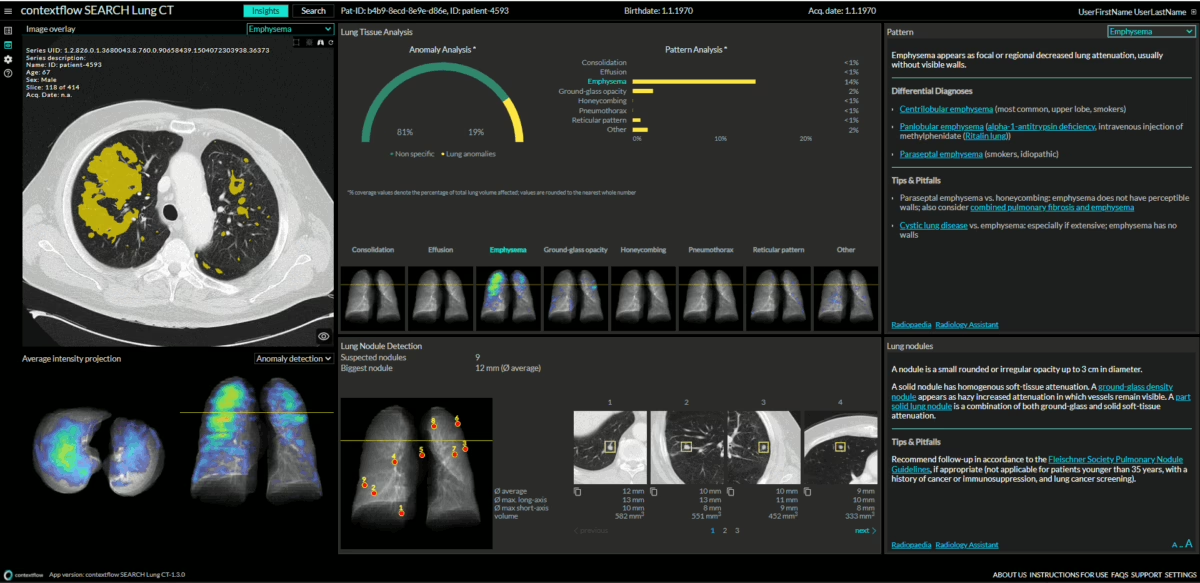
Apart from the sheer mass of images to be processed, nodules and lung metastases have to be diagnosed and not only compared with previous examinations and older images in a high resolution, but also the nodules have to be measured manually with millimeter precision. This task can now be made easier with use of the software. Another aspect is pattern recognition, which plays such a big role in detecting lung diseases. The software helps to better differentiate the individual components of the various disease patterns that show up mixed or overlapping in the CT images. This is very important for targeted patient care, because there are lung diseases that end in fibrosis, a severe loss of function of the lung. Recently, however, therapeutics have come on the market that can influence the course of the disease and bring certain forms of fibrosis to a halt. In this respect, it is important to find out which form of fibrosis the patient is suffering from and whether they can be helped with these new therapeutic agents. So if it is possible to train pattern recognition in ILDs accordingly and thus obtain more differentiated statements, that will be a great benefit for patients. 

How the system works

To use SEARCH Lung CT, the radiologist highlights an area of interest in a lung CT (in their native viewer), and then contextflow’s user interface opens in a new browser tab. “The home screen opens up and offers an analysis of the lung: disease patterns and nodules, their distribution and volume as well as a shortlist of possible diseases,” describes Scholtz. The radiologist takes over the evaluation of these measurements and suggestions, supported by heatmaps indicating the distribution of these disease patterns and their measurements by volume. An updated version of the software under development will display the disease patterns and nodules in enlarged form, measure their volume and then compare them with the disease patterns and nodules from the previous examinations. This is helpful because clinicians are most interested in how anomalies change over time in order to assess the patient’s treatment response. This is all the more challenging because there are often many nodules that also show contradictory behavior in that some get smaller while others get larger. At this point, the program is an invaluable help. 

Smooth integration into existing IT

“Our goal from the beginning was to integrate SEARCH Lung CT into our existing IT infrastructure and not simply install another program. This process was challenging, but in the meantime the software has been integrated in such a way that we can activate SEARCH Lung CT from within our routine program,” Scholtz explains. The lung area to be diagnosed is marked in the radiologist’s viewer, and the finished analysis of the selected region is automatically generated as a PDF report. The prerequisite for this seamless integration was the very good cooperation between contextflow, our in-house IT and the IT provider Medigration from Bender Group, with whom CALW-Leonberg has been working for many years. “We work completely digitally – from the distribution of examination orders to the registration to the devices; from speech recognition, image and material management to dose management. There are a large number of sub-functions that converge in this system, and SEARCH Lung CT is one such deeply integrated sub-function.”

On a day-to-day clinical basis, radiologists are grateful for anything that saves time and improves diagnostics. “The system is perfectly integrated, and the workflow is so smooth that there is virtually no learning curve. We all use it automatically because we as diagnosticians get a real benefit for our patients,” says a satisfied Dr. Scholtz.

Looking toward the future

Since even the best solution still leaves something to be desired, contextflow is currently working on a feature that not only lists lung findings, but also compares them over time. In addition, the software is looking to move from the pattern-level to the disease-level, meaning it will also immediately provide suggestions as to which diseases these patterns may belong to for a given patient.
Other News

contextflow featured on ORF’s “Kreuz und Quer”
2022-04-07

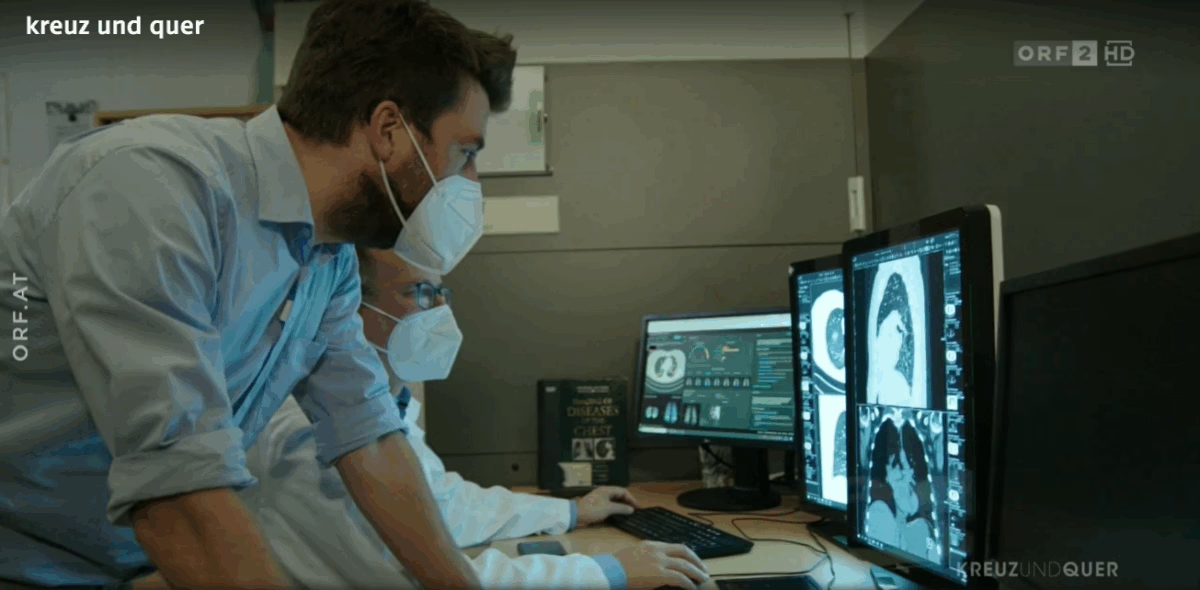
The Austrian TV series Kreuz und Quer featured contextflow’s software in a recent episode on developments in artificial intelligence. Co-Founder & Chief Scientist Georg Langs and Dr. Helmut Prosch were interviewed at the Medical University of Vienna on how AI is shaping radiology workflows. Our clinical decision support system SEARCH Lung CT has been deployed at the university, and was thus featured in this episode. Jump ahead to 49:40 to see it in action!

Other News

contextflow Welcomes Jacob Visser as Clinical Advisor
2022-02-16

The addition of Jacob is an important part of contextflow’s mission to improve radiology workflows by developing software in close collaboration with leading clinical radiologists.

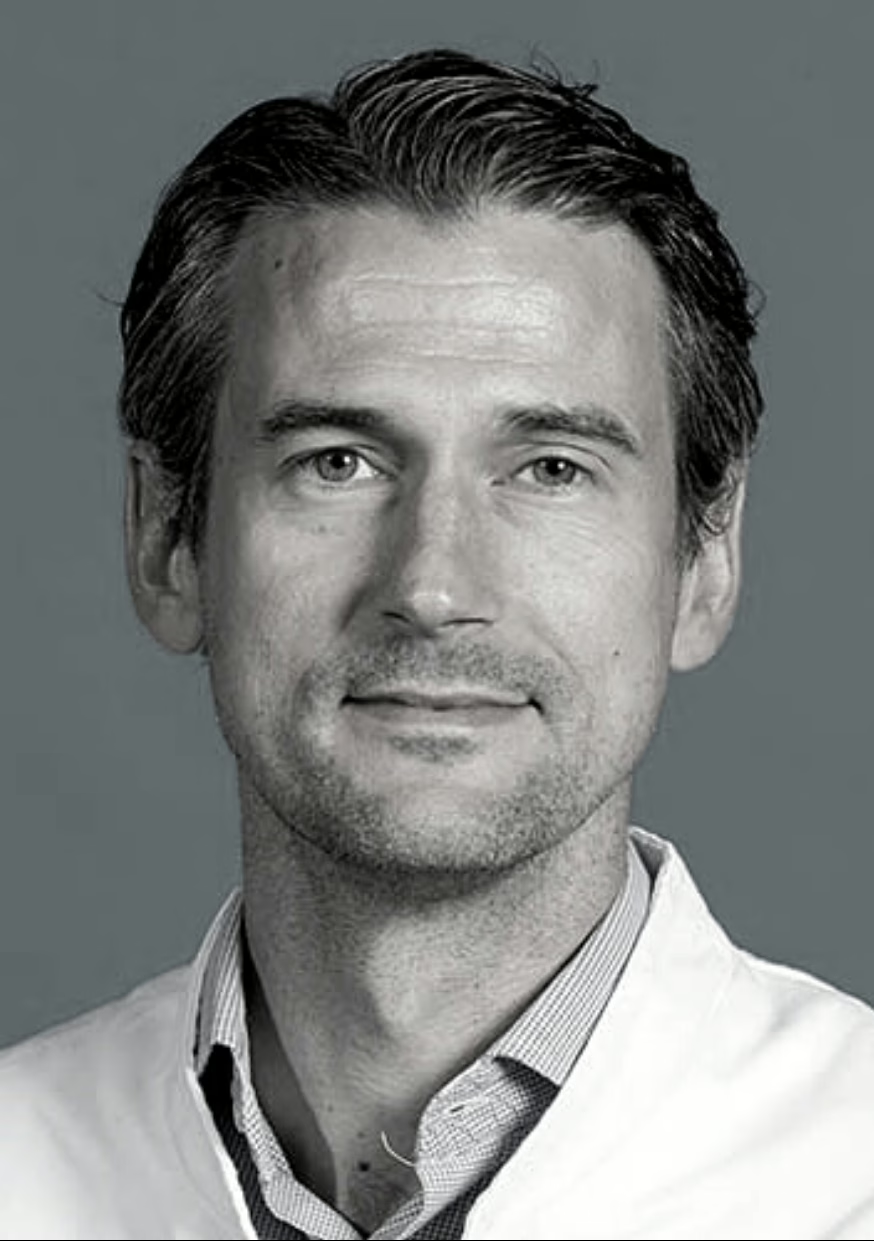
contextflow GmbH, the Vienna-based developer of deep learning-based software for medical image analysis, is thrilled to announce the addition of Jacob Visser as Clinical Advisor. Jacob will make contributions around high-quality annotated data, user interface (UI) design, and the clinical impact of patterns/diseases for product development. 

Jacob holds several distinguished positions at Erasmus MC in Rotterdam, NL: Assistant Professor of Value-Based Imaging, Chief Medical Information Officer, and Head of Imaging IT and Value-Based Imaging. He is also a member of the European Society of Radiology’s (ESR) Value-Based Radiology Subcommittee, and serves as a member of the European Society of Medical Imaging Informatics’ (EuSoMii) Scientific Committee. As if his schedule weren’t busy enough, Jacob contributes to the Radiological Society of North America’s (RSNA) Working Group for Common Data Elements.

As contextflow CEO & Co-Founder Markus Holzer puts it, “Jacob’s resume reflects both his skills as a practicing radiologist and the trust the radiology community has in his abilities to translate new technologies into improved patient outcomes. We’re incredibly lucky to benefit from his guidance.” 

Regarding his inspiration to join the team, Jacob says, “I have been following contextflow’s progress practically since the company’s founding, and their traction in the area of lung CT is impressive. Being able to shape clinical decision support tools that myself and colleagues can benefit from in clinical practice is a big motivator. We’re literally shaping the future.”

Other News

Radiologists at the University of Innsbruck rely on SEARCH Lung CT from contextflow
2022-02-08

Almost every second computed tomography (CT) scan of the lung shows abnormal findings. Most of the time these are pulmonary nodules, one possible indicator of cancer. But which findings are harmless and which need to be checked and treated? Assessing lung CTs is no simple task, but radiologists are increasingly finding support in new technologies. contextflow SEARCH Lung CT is a clinical decision support system that detects, visualizes and quantifies lung anomalies and pulmonary nodules. “In detail, it provides location and extent of changes and heat maps for six image patterns, as well as visualizations and measurements of detected pulmonary nodules. In addition, the tool analyzes and classifies 19 image patterns in selected regions of a scan; retrieves visually-similar, expert-verified reference cases; and provides relevant links to literature, guidelines and differential diagnoses,” explains Markus Krenn, Chief Product Officer at contextflow.

A deep learning-based solution to simplify daily work

Since October 2021, a team of radiologists led by PD Mag. Dr. Med. Univ. Gerlig Widmann, Managing Senior Physician at the University Department of Radiology at the Medical University of Innsbruck, has been using SEARCH Lung CT. “We expect significant added value for our work and the patients, particularly on account of the system’s ability to quantify lung anomalies. The software provides us with percentages of pathological changes, visualizes the dynamics of these changes over time and suggests reference cases with similar findings and diagnostic literature for differential diagnosis,” says Dr. Widmann. The University Department of Radiology at the Medical University of Innsbruck is one of the largest institutions for radiological diagnostics in Austria and treats the vast majority of lung patients in Tyrol in close cooperation with the departments of oncology, thoracic surgery, pneumology and the lung department of Natters Hospital. The first experiences with SEARCH Lung CT have been thoroughly positive, as the managing senior physician continues: “The segmentation of abnormalities such as shadows, reticular patterns or emphysema works extremely well. The platform is very clearly structured with references to current literature, including pattern description and a list of possible differential diagnoses. You can clearly see that there is a valid reference data set behind the AI.”

Last but not least, Dr. Widmann also expects to be able to establish a diagnosis more quickly: in a recent study at the Medical University of Vienna, the average report reading time was 31% shorter when SEARCH Lung CT was available for use*. These findings were true for both young and experienced radiologists.

*Publication forthcoming

Integration with Dedalus DeepUnity PACS ensures smooth workflow

“The implementation of SEARCH Lung CT was simple, quick and straightforward. The cooperation between our IT and contextflow was exemplary,” says Dr. Widmann happily.

The clinical decision support software is seamlessly integrated into the hospital’s image data management system (PACS). A radiologist wishing to use SEARCH Lung CT only has to click one button to seamlessly continue working with the tool. The images are then automatically evaluated and transferred to the report. “It’s all very simple. So far we are very satisfied with SEARCH Lung CT,” concludes Dr. Widmann.

Other News

Radiologie der Universität Innsbruck setzt auf SEARCH Lung CT von contextflow
2022-02-22

Nahezu jede zweite Computertomografie (CT) der Lunge zeigt einen auffälligen Befund. Am häufigsten sind das Lungenrundherde, die auf Krebs hindeuten können. Doch welcher Befund ist harmlos und welcher muss kontrolliert und behandelt werden? Die Beurteilung ist alles andere als trivial. Dabei unterstützt SEARCH Lung CT, ein System zur klinischen Entscheidungsunterstützung von contextflow, den Radiologen. Die dahinterstehende Künstliche Intelligenz (KI) erkennt, visualisiert und quantifiziert Lungenanomalien und Lungenrundherde. „Im Detail liefert sie Ort und Ausmaß der Veränderungen und Heatmaps für sechs Bildmuster sowie eine Visualisierung und Messungen von erkannten Lungenrundherden. Daneben analysiert und klassifiziert das Tool 19 Bildmuster in ausgewählten Regionen, ruft visuell ähnliche, verifizierte Referenzfälle ab und liefert relevante Links zu Literatur, Leitlinien und Differentialdiagnosen“, erläutert Markus Krenn, Chef-Produktmanager bei contextflow, das System.

KI-Lösung vereinfacht tägliche Arbeit

Seit Oktober 2021 nutzt das Team um PD Mag. Dr. med. univ. Gerlig Widmann, geschäftsführender Oberarzt der Universitätsklinik für Radiologie an der Medizinischen Universität Innsbruck, SEARCH Lung CT. „Besonders durch die Quantifizierung von Lungenpathologien erwarten wir uns einen deutlichen Mehrwert für unsere Arbeit und die Patienten. Konkret liefert uns die Software Prozentangaben von krankhaften Veränderungen, visualisiert die Dynamik dieser Veränderungen über die Zeit und schlägt Untersuchungen mit ähnlichem Bild und diagnostische Hilfestellungen in Form einer Differenzialdiagnose vor“, so Dr. Widmann. Die Universitätsklinik für Radiologie der Medizinischen Universität Innsbruck ist eine der größten Einrichtungen für radiologische Diagnostik in Österreich und betreut in enger Zusammenarbeit mit den Abteilungen für Onkologie, Thoraxchirurgie, Pneumologie und der Lungenabteilung des Krankenhauses Natters die weit überwiegende Zahl von Lungenkranken in Tirol. Und die ersten Erfahrungen dort mit SEARCH Lung CT sind durchweg positiv, wie der geschäftsführende Oberarzt ausführt: „Die Segmentierung von Auffälligkeiten wie Verschattungen, retikulären Mustern oder Emphysemen funktioniert äußerst gut. Die Plattform ist sehr übersichtlich aufgebaut, auch mit der Referenzierung zur aktuellen Literatur, zur Musterbeschreibung und zur Evaluierung möglicher Differenzialdiagnosen. Man erkennt deutlich, dass hinter der KI ein valider Referenzdatensatz liegt.“

Nicht zuletzt erwartet Dr. Widmann auch, dass er eine Befundung schneller abschließen kann. Das unterstützt eine Studie, die zeigt, dass die durchschnittliche Befundzeit um 31 Prozent kürzer sei, wenn SEARCH Lung CT genutzt werde. Darüber hinaus steige die diagnostische Genauigkeit sowohl bei jungen als auch bei erfahrenen Radiologen (Publikation in Kürze).

Integration in das Dedalus DeepUnity PACS sorgt für reibungslosen Workflow

„Die Implementierung von SEARCH Lung CT verlief einfach, rasch und unkompliziert. Die Zusammenarbeit zwischen unserer IT und den contextflow-Technikern war vorbildlich“, freut sich Dr. Widmann.

Die Software zur klinischen Entscheidungsunterstützung ist nahtlos in das Bilddatenmanagementsystem der Klinik integriert. Befundet der Radiologe ein Lungen-CT, muss er nur einen Button anklicken, um nahtlos mit dem Tool weiterzuarbeiten. Dort werden die Bilder dann automatisch ausgewertet und die Resultate ins PACS eingespielt. „Bisher sind wir mit SEARCH Lung CT sehr zufrieden. Wir freuen uns über die gebotenen Möglichkeiten und folgen der kontinuierlichen Weiterentwicklung dieser Technologie mit großem Interesse“, sagt PD Mag. Dr. med. univ. Gerlig Widmann.

Other News

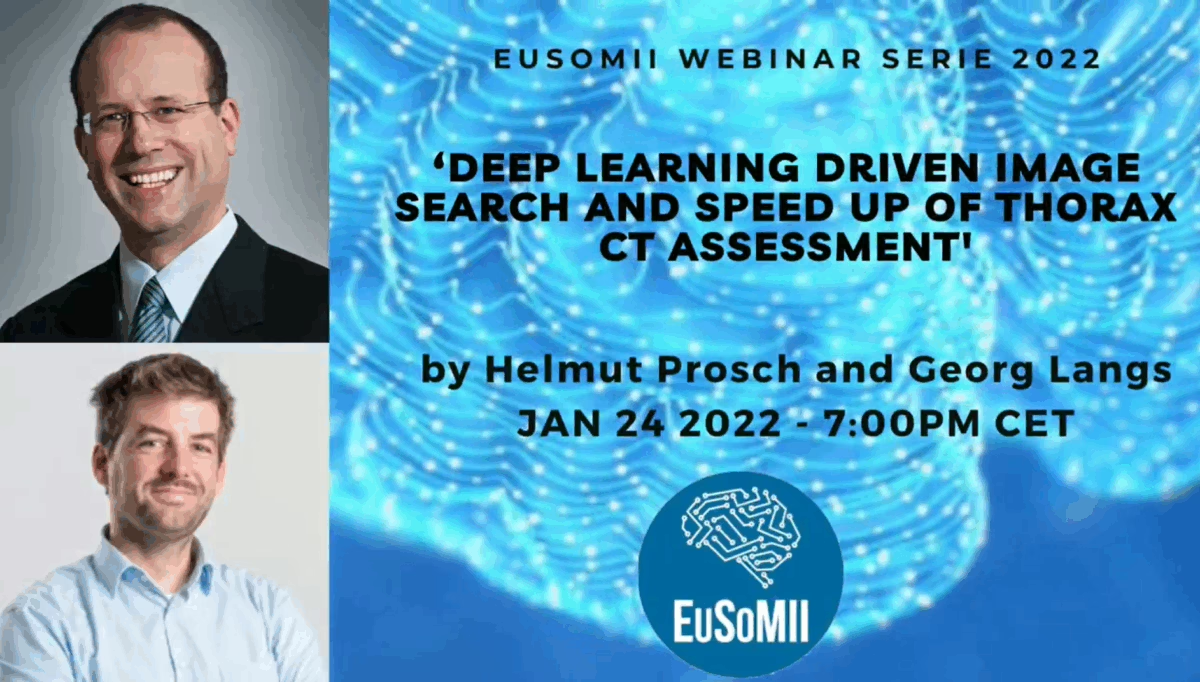
Deep Learning-Driven Image Search and Speedup of Thoracic CT Assessment
2022-02-01

Our friends at the European Society of Medial Imaging Informatic (EuSoMii) host regular webinars on hot industry topics. This month was practically a contextflow reunion of sorts: Chief Scientist and Co-Founder Georg Langs and Advisor Helmut Prosch presented their clinical findings from a study conducted at the Medical University of Vienna / Vienna General Hospital regarding SEARCH Lung CT in radiology routine, and new Clinical Advisor and current EuSoMii President Erik Ranschaert moderated the event. Details on the why and how behind the study as well as results were presented. Spoiler: we saw an average report reading time savings of 31% when SEARCH Lung CT was available for use (publication forthcoming). Watch the full recording here.

Other News

Erik Ranschaert Joins contextflow as Clinical Advisor
2022-01-26

contextflow GmbH, the Vienna-based developer of deep learning-based software for medical image analysis, is thrilled to announce the addition of Erik Ranschaert as Clinical Advisor, responsible for product and research dissemination activities. Erik is the former President of the European Society of Medical Imaging Informatics (EuSoMII) and the co-editor and author of several popular books, including the very first one on Artificial Intelligence for Medical Imaging.

Erik was a pioneer in the field of teleradiology, and his subsequent role as Chairman of the European Society of Radiology’s e-Health and Informatics Subcommittee contributed to the publication of the ESR white paper on teleradiology. He is currently a radiologist at St. Nikolaus Hospital in Eupen (Belgium) and a Visiting Professor of Radiology at Ghent University. In his scientific research and role as advisor, he focuses mainly on bringing new technologies into clinical workflows. He attaches great importance to the installation of the right infrastructure and a suitable policy in the hospital.

This last point in particular stands out, as contextflow’s CEO & Co-Founder Markus Holzer explains: “Erik’s resume is impressive from beginning to end, but few people in our industry have as much experience bringing transformative, value-based tools into practice as he does. We look forward to learning and challenging the status quo even further under his guidance.”

Erik continues: “I have a good understanding of the potential of AI within a clinical environment, and how radiologists can make the best use of it. contextflow SEARCH Lung CT is one of the applications that certainly fits radiology’s current needs and can simplify the analysis of complex lung pathology. With the right insights and technology, we can succeed in introducing AI in a very attractive way to radiology departments on a global scale.”

Other News

Alma Medical & contextflow announce distribution agreement to deliver AI tools into clinical radiology practice
2022-01-11

Alma Medical has recently signed a collaboration agreement with Vienna-based contextflow with the aim of incorporating its innovative algorithm for the identification and interpretation of lung-specific image patterns in CT scans into the new digital health platform: Alma HEALTH PLATFORM.

This collaboration will allow hundreds of radiologists to integrate this artificial intelligence tool into their clinical workflow, increasing their productivity.

contextflow supports 19 different patterns in lung CT scans and lung nodules, including those related to COVID-19. It searches a vast database of visually similar 3D medical images and displays relevant case statistics and links to differential diagnosis literature. Moreover, it provides a quantitative and visual insight into relevant patterns and lung nodules.

Through the digital platform, radiologists will be able to report faster* and to get expert advice with a single mouse click. contextflow’s solution provides non-chest experts with relevant contextual information, which helps raise their level to that of an expert. *Results from a soon-to-be published clinical study show average reading time savings of 31% for SEARCH Lung CT only.

The joint solution of the digital platform, together with contextflow’s solution, is an excellent way to improve radiologists’ performance.

About Alma Medical:
With more than 15 years of experience in the medical imaging market, Alma Medical has a clear goal: use innovation in the service of medicine, the healthcare professional and, of course, the patient. The Alma HEALTH PLATFORM allows doctors to access medical data wherever and whenever they want, work collaboratively with other professionals and communicate with patients in a structured and customizable workflow.

Alma wants data integration and technologies such as AI to automate and improve workflows, but most of all, the company wants to create a new, more equitable relationship structure between all the players of the healthcare ecosystem and also with the patient.

Other News

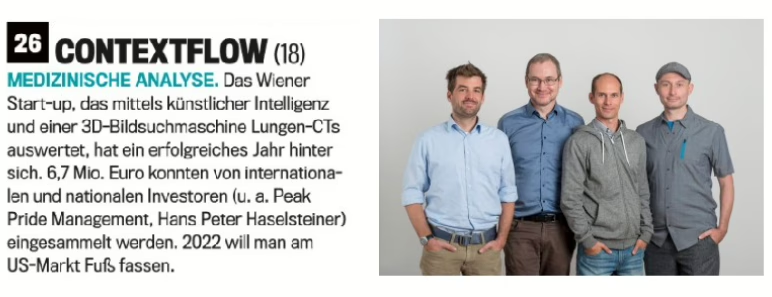
contextflow ranks as one of Austria’s top startups in 2021 (again)
2022-01-11

For the third year in a row, contextflow has been named one of Austria’s 100 Best Startups by trend.at. To be specific, we’ve ranked in the top 30 each year, and in 2021, we were honored with #18.

A 20-member jury consisting of the country’s most experienced startup experts made the selection…the jury members have themselves invested in over 500 startups in Germany and abroad. Check out the top companies here.

Other News

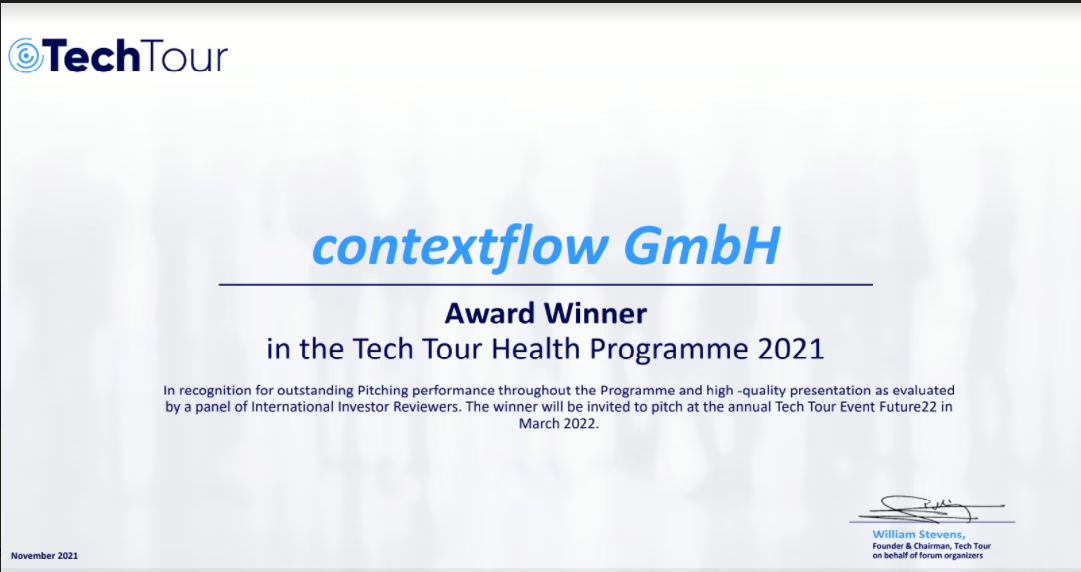
contextflow is a winner of Tech Tour Health 2021
2022-01-11

On November 23, CEO & Co-Founder Markus Holzer gave a virtual pitch to an audience of Investors, VCs, Corporates and Guests from the Health Ecosystem. Out of 200+ applicants, 42 companies were chosen to present, and of these, 23 were named winners and invited to participate at the Tech Tour flagship event – Tech Tour Future22 in March 2022 to be attended by 1000+ top investors, experts and guests from Europe, the United States, Asia, the Middle East and Western Africa. The complete list of winners can be found here.

Other News